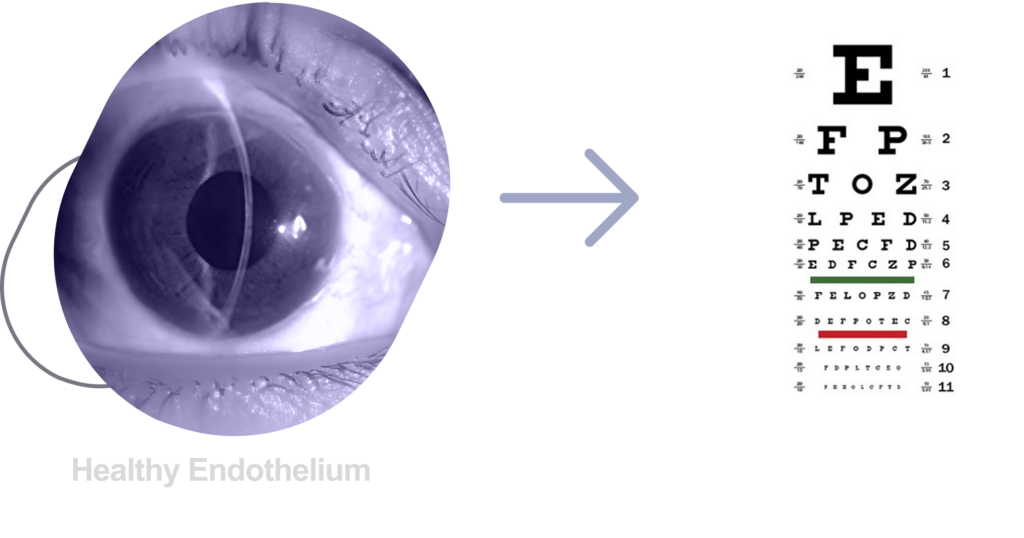
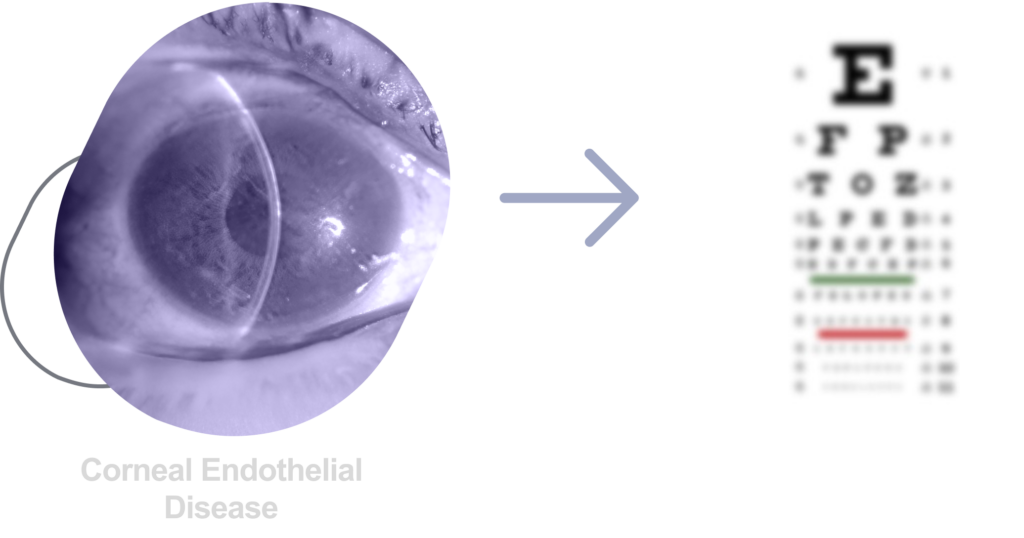
The corneal endothelium is composed of a single layer of specialized cells lining the inner surface of the cornea. These cells regulate fluid balance to keep the cornea clear, allowing light to pass through without distortion.
Because endothelial cells do not regenerate, maintaining their health is essential for preserving vision.
When Endothelial Cells Are Lost
Endothelial cell loss occurs gradually with age and more rapidly due to conditions such as Fuchs dystrophy, trauma, congenital dystrophies, and other causes of endothelial dysfunction.
When a significant number of cells are lost, the cornea swells and becomes cloudy. This reduction of cells leads to symptoms such as glare, halos, reduced contrast, blurred vision, discomfort, and, in advanced cases, significant pain.
A Growing Global Need
Corneal endothelial disease affects millions of people worldwide.
Despite its prevalence, treatment options are limited. Because endothelial cells cannot regenerate, advanced disease requires corneal transplantation, a procedure dependent on a scarce supply of donor tissue and specialized surgical expertise.
Global survey data show a striking imbalance: for every healthy donor cornea available, 70 diseased eyes are in need of treatment.1
This shortage leaves many patients without access to the care they require.
1 Gain P, Jullienne R, He Z, et al. Global Survey of Corneal Transplantation and Eye Banking. JAMA Ophthalmol. 2016;134(2):167–173. doi:10.1001/jamaophthalmol.2015.4776
Current Treatment Approaches
When disease progresses, corneal transplantation is the standard of care. This includes:
Endothelial Keratoplasty (DMEK, DSAEK): selective replacement of the posterior cornea and the endothelial layer
While these procedures can restore vision, they require:
Available donor cornea for each patient
Specialized surgical training
Careful postoperative management
Infrastructure not available in many regions
As a result, availability remains limited for a significant portion of the global population.
The Need for Scalable, Accessible Solutions
The significant global burden of endothelial disease, combined with the limited availability of donor tissue and the complexity of current surgical approaches, highlights the need for treatment options that can scale more effectively.
Aurion’s corneal endothelial cell therapies aim to provide broad access to care by eliminating barriers related to surgical complexity, donor tissue scarcity and post-operative complications.
To learn more about Aurion Biotech’s work in this area, visit our Pipeline page.
Aurion Biotech collaborates with clinicians, researchers, and partners committed to advancing the future of corneal treatments. Get in touch to learn more about our science, programs, and global mission.
We use cookies to ensure that we give you the best experience on our website. If you continue to use this site we will assume that you are happy with it.